Kol HaEmek
About Us

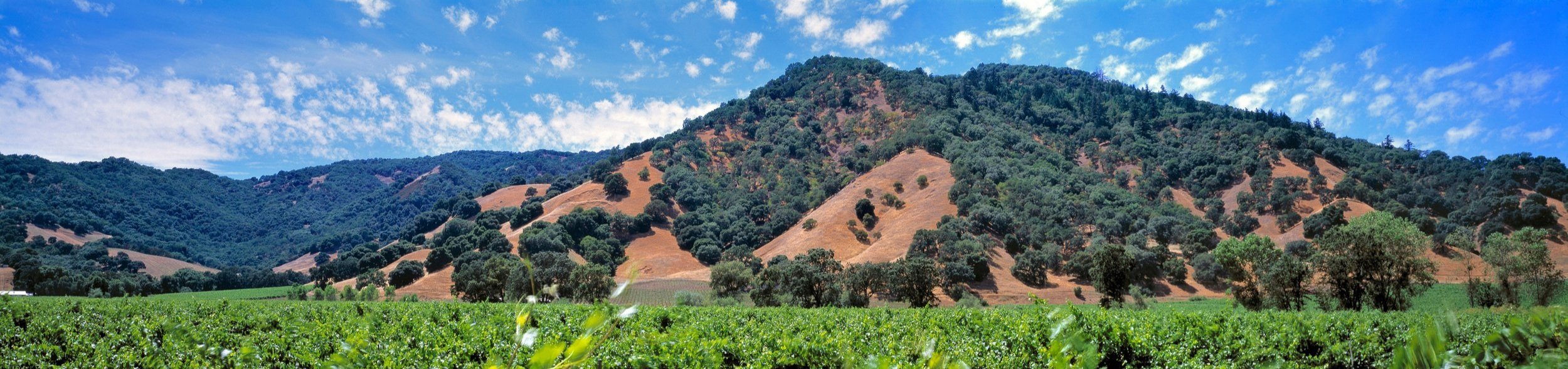
Mendocino and Lake Counties are large geographical areas, featuring rivers, streams, mountain alluvial valleys, and ranges, located about 100 miles from San Francisco, with low population density and the cleanest air in California. We are grateful to live and worship amidst such beauty.
We invite you to participate in our vibrant and meaningful classes, services and social gatherings. All of these will help you learn about Judaism and add depth to your life as well as enrich the lives of those you love. At Kol HaEmek, you will have a chance to engage in tikkun olam (repairing the world), working together on vital causes within and beyond Mendocino County. Your children will enjoy participating in creative and fun educational programs where they will make new friends and develop their Jewish knowledge and identity.
Letter from the Board: An Invitation to Our Kol HaEmek Community
Kol HaEmek means “Voice of the Valley.” We chose this name because we want to be a Jewish community where many voices are welcomed, heard, and valued. We call ourselves a shul because traditionally a shul is more than a place of prayer. It is a place for learning, gathering, celebration, and community.
As we approach the High Holidays, the Board has been having important conversations about the future of Kol HaEmek. We want to share some of those concerns with you—and, most importantly, we want to hear from you.
The topics we are asking you to consider are:
High Holiday leadership
Creating a community where people with differing views feel welcome
Membership, participation, and financial support
The future of our building
What you need from Kol HaEmek
Please read through the rest of this letter and share your thoughts using a second form (linked below). If you prefer, you may email us at kolhaemekrv@gmail.com.
High Holiday Leadership
Cantor Richard has been a precious gift to our community. His warmth, musicality, wisdom, and leadership have enriched our services, and we are grateful that he will continue to lead services for us during the year. Unfortunately, his other professional commitments prevent him from leading our High Holiday services this year.
We are excited to welcome Rabbi Alyson Soloman and Kohenet Amanda Nube, who will be leading our High Holiday services this year. We look forward to learning from them and experiencing the gifts they bring to our community. We hope you will join us.
A little more organization, a lot more welcome!
This year, we are asking everyone to register for High Holiday services even if you are not able to make a financial contribution. Registration helps us plan and maintain a safe gathering.
There is no required fee, and no one will be turned away for lack of funds. At the same time, our High Holiday services will cost Kol HaEmek nearly $10,000 this year; if we are to continue to offer services, we need the support of those who are able to contribute.
Please consider making a meaningful contribution toward these costs when you register. Even a small contribution will help make it possible for everyone in our community to participate.
Click here to register for Kol HaEmek High Holiday Services, begin or renew your membership, and share your thoughts.
A Community for Many Voices
We believe Kol HaEmek should be a place where people with differing political and personal perspectives can pray, learn, and be together. As a Board, we have chosen to remain politically neutral. That does not mean we have no values. We believe in human dignity and human rights. We are against genocide, we support human rights for the people of Palestine, and we are not against the people or existence of Israel.
We know that people have strong and sometimes very different feelings about these issues. We want to be a community where we can listen to one another with respect and remain connected even when we disagree.
If you have stopped attending because of these issues, we especially want to hear from you. What would help you feel welcome and comfortable returning?
Membership and Participation
Like many small congregations, Kol HaEmek has experienced a decline in participation, volunteer involvement, and financial support. A shul is not something that a few people can sustain on behalf of everyone else. If we want Kol HaEmek to continue as a vibrant Jewish community, we need more of our members to step forward and help make it happen.
Membership contributions help us maintain our shul, support service leaders, provide programs, and cover the costs of keeping our community functioning. We recognize that people's financial circumstances differ, which is why we offer a sliding scale.
But financial support is only part of the picture. We need people who are willing to volunteer their time, share their skills, help with programs and children’s activities, assist with maintenance and special events, and take an active role in creating the community they want to be part of.
If Kol HaEmek is important to you, please consider what you can contribute to its future.
We ask:
If you attend but are not currently paying membership, would you consider contributing what you can?
If money is difficult, what time, skills, or services could you offer?
What could you take responsibility for that would help our shul thrive?
What would help you become more involved in our community?
The future of Kol HaEmek cannot rest on the shoulders of the Board alone. We need the people who want this shul to be here to step forward and become part of making it happen.
Do We Really Need a Building?
We are also seriously considering whether we should continue to own and maintain our building.
Having a building gives us a permanent home for prayer, learning, children’s activities, and community gatherings. It provides a home for our Torah and Ark, our library and other sacred items, and a place where visiting service leaders can stay.
But maintaining a building also costs money and requires ongoing work, including maintenance, cleaning, landscaping, utilities, and other expenses. One possibility we must consider is selling the building and finding other ways to gather as a community. No decision has been made.
We want to know:
How important is having a physical building to you?
Do you think we should continue to own our building?
If we did not have a building, what would you need in order for Kol HaEmek to continue to feel like your Jewish community?
We Need to Hear from You
Kol HaEmek belongs to all of us. Its future depends on the voices, ideas, participation, and care of our community. Please take a few minutes to respond to us via email: kolhaemekrv@gmail.com.
Whether you attend regularly, have stepped away, are new to Kol HaEmek, or have been part of our community for many years, your voice matters.
Together, we can listen, learn, and shape the future of our Jewish community.
With gratitude from the Kol HaEmek Board of Directors:
Sara, Robin, Janae, Kate, Perri and Ace

Our Mission
Our Purpose is to create an environment in which Jewish culture, religion and spiritual life can flourish; to perpetuate and renew our Jewish connections with ourselves and our homes, within our community and the world.
Our Mission is to express and support Judaism in the following ways:
To provide a space for religious study and prayer
To share life cycle events through meaningful traditions
To offer and sponsor Jewish education for all ages
To be inclusive of all partnerships and family configurations
To include interfaith families and Jews-by-choice
To network with other Jewish communities
To educate and share our culture with other Mendocino County residents
To be a foundation for tikkun olam (healing of the world) as a community
Our History
The Mendocino County Jewish Communities, a non-profit organization, began its journey in 1982 in Ukiah, bringing together a group of dedicated individuals committed to fostering Jewish life in the area. Early leaders included Carol Rosenberg, Harvey Frankle, Helen Sizemore, and Bill Ray, with Norman Rosen providing legal counsel. Pioneering members such as Barry Vogel, Helene Epstein, Lucy Bayer, Clarissa Shaefer, Ellen Saxe, Carol Goodman, Gary Relin, and Johanina Wikoff played vital roles in shaping our community.
Recognizing the unique needs of the region, the Mendocino County Jewish Communities soon evolved into two distinct groups: Mendocino Coastal and Mendocino Inland. By 1983, the Inland community had grown significantly, boasting 75 individuals on the mailing list and 30 families with paid memberships. Our children's education program flourished, with bi-weekly classes attended by over two dozen young learners.
Rabbi Hanon Sills, residing in Albion, became an integral part of our community, especially during holiday celebrations. His charismatic presence and support from the Jewish Community Endowment made him our first High Holiday leader in 1982, leading a memorable service at Helen's home. A notable moment from this period was when a neighbor, Harvey Baumoel, paused his lawnmower upon learning of our gathering, joined our minyan, and became an active member.
Rabbi Sills' vibrant storytelling, singing, and dancing enriched our celebrations for many years until he moved to Eugene in 1989 to lead the Hillel at the University of Oregon. Meanwhile, the Coast community sought a resident rabbi, inviting leaders like Rabbi David Wolfe-Blank and Rabbi Margaret Holub to guide their High Holiday services. Rabbi Holub eventually became a half-time resident rabbi, splitting her time between the Coast and Inland communities, and significantly contributing to our first group of B'nei Mitzvah.
During the years of visiting rabbi contracts, we were blessed with inspiring leaders like Rabbi David Wolfe-Blank and maggid (storyteller) Daniel Lev, each serving for two years. Our community thrived under the mentorship of Rabbi Shefa Gold, who led our High Holiday services for a decade and nurtured our spiritual growth.
At Rabbi Gold's recommendation, Rabbi Shoshanah Devorah joined us from Seattle, serving as our beloved leader for thirteen years before retiring to Israel. Today, we continue our tradition of scheduled prayer leaders, currently benefiting from the wisdom and guidance of four exceptional Jewish teachers and rabbinical students who inspire and lead our congregation.
The Story of Our Torah
Pisek was a small town in Southern Bohemia (Czechoslovakia) , home to 16,000 people and beautifully situated among hills and forests with the River Otava flowing through it. In the summer, it became a resort town. The synagogue was old, baroque, and well-preserved, but we didn’t have a rabbi—only borrowing one occasionally. Pisek had about 300 Jews. After the war, only 3 came back.
On May 5, 1945, the 12th unit of the United States Army liberated Pisek. After the Allied forces liberated Czechoslovakia, the Torahs sat for nearly 20 years in a warehouse in Prague and became badly deteriorated.
In 1964, a London antique dealer convinced the Czech government to sell the Torahs. So, all 1,564 Czech Torahs were shipped to Westminster Synagogue in London. The process of repairing them took place over the next 30 years. Almost all showed evidence of the Holocaust—they were blood-stained, charred by fire, and water-damaged. Many still had the labels placed on them by the Nazis, and some contained slips of paper with disparaging remarks.
As the Torahs were repaired, they were sent out to schools, hospitals, old age homes, and newly formed Jewish communities.
In 1990, Westminster Czech Memorial Torah #393, the Pisek Torah, was given on permanent loan to a small Jewish community in Northern California. This community of 200-300 people lived in and around a town of 15,000-16,000, located in a beautiful valley surrounded by hills and forests with the Russian River flowing through it. A community like Pisek, which didn’t have a rabbi but borrowed one on occasion.
Once again, the Torah was turned—first on the dining room table of Karen and Norm Rosen’s home, and for over 30 years now, on many occasions: for the Sabbath, High Holidays, and for rites of passage of our young people into adulthood—bar and bat mitzvahs.
The people of Pisek are remembered each year during our Yiskor services, the memorial service where the names of our deceased loved ones are read, and they are remembered when the Kaddish, the mourner's prayer, is said.
In one hand, we hold the joy and gratitude of having the Pisek Torah in our community—a Torah around which we can wrap our fine traditions. In the other hand, we hold the horror and pain of the Holocaust and the tragic deaths of the people of Pisek who perished.
May they always be remembered.
On October 8, 2017, news broke about the Redwood Complex Fire on West Road in Redwood Valley. Dan Hibshman, listening to the news, realized that our Shul might be in the fire’s path. Inside our Shul was the Pisek Torah—a Torah that still had stains from the destruction of its original home. He called families in Redwood Valley, but there was no answer—they had been evacuated. Rather than try to find someone else, Dan, a non-practicing, very non-observant, and very questioning Jew, realized he was the one to rescue the Torah.
Dan, Leslie (his wife), and their dog Sam climbed into Dan’s truck, stopping briefly for a key, and drove to Redwood Valley. They met a roadblock on West Road; no one was allowed to pass. They could see the Shul just beyond where they stood but couldn’t get any closer.
They tried to explain the Torah’s importance and history; one of the men guarding the road heard their story and quietly whispered, "One might walk in driveways and open spaces." They looked at each other, slipped out of the truck, and, with Leslie holding the dog, took a path to School Way, slipped into a driveway, and came to the back of the Shul. Dan entered the building and took the Torah from the Ark. He carried the Torah like a baby, and they boldly walked past the guards down the road to their truck.
Their informant winked and gave them a small wave. They carefully wrapped the Torah in a tarp, placed it in the truck, and drove back to a friend’s house in Ukiah. They returned her key and gently handed her the Torah.
The Torah spent the next five days wrapped in a blanket on the sofa. That was until Simchat Torah, when the community came to its temporary home, chanted the most heartfelt Shehecheyanu for this congregation, and carefully rolled the cherished Torah on the dining room table, reading the end of Devarim and the beginning of Bereshit.